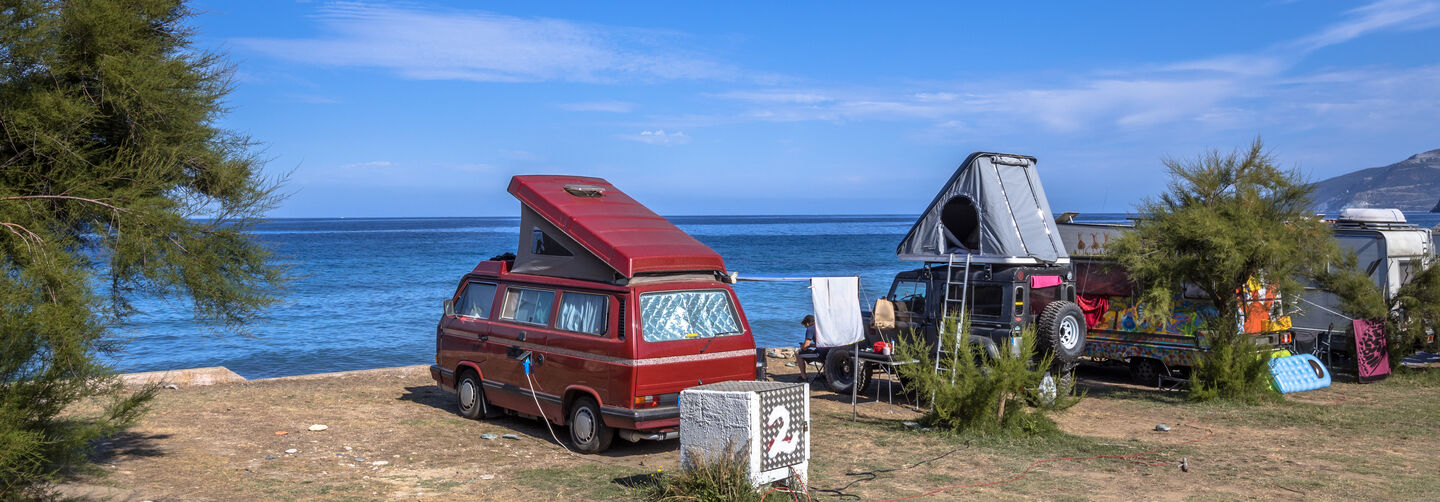
A Beginner’s Guide to Camper Van Electricity
 Julia
JuliaUpdated at: 02/09/2026
Reading time: 5 minutes
If you're planning your first motorhome holiday, the electrical system can seem a little intimidating. Questions like "How do I charge the battery?", "Can I use a kettle?" or "What happens if the power runs out?" are all completely normal. The good news is that camper van electricity is much simpler than it looks. Once you understand the basics, you'll be able to travel with confidence. Whether you're staying at a campsite with an electric hook-up or spending the night off-grid, knowing how your motorhome is powered will help you get the most out of your trip. In this guide, we'll explain everything you need to know about motorhome electricity, from charging your battery to understanding the difference between 12V and 230V power.
How camper van electricity works
Every motorhome has an electrical system that powers everything from the lights and water pump to the fridge and USB sockets. It works in a simple way: electricity is stored, recharged and then used whenever you need it.
The electricity is stored in a leisure battery, which works much like a large rechargeable power bank. It recharges while you're driving, when you're connected to an electric hook-up, or — in some motorhomes — through solar panels. That stored power is then used to run the appliances inside your vehicle.
Once you know how the system works, running your motorhome becomes second nature.
Where your power comes from
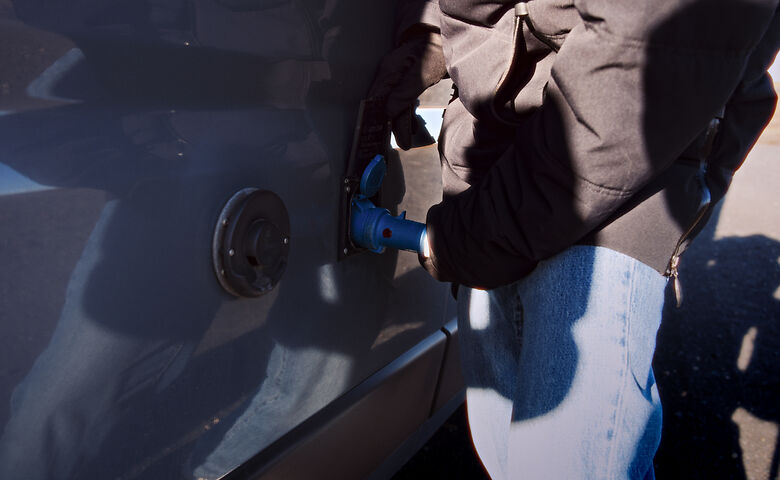
Your motorhome battery can be charged in several ways, giving you flexibility whether you're staying at a campsite or travelling off-grid.
Leisure battery
The leisure battery powers your motorhome whenever you're not connected to mains electricity. It supplies power to essentials such as the lights, water pump, fridge and USB charging points.
Alternator
Every time you drive, the alternator recharges the leisure battery. Even a short drive can replace much of the power you've used overnight.
Electric hook-up
Many campsites offer an electric hook-up, allowing you to connect your motorhome directly to the mains electricity supply. This charges your leisure battery and powers your 230V appliances.
Solar panels or generators
Some motorhomes are equipped with solar panels, which recharge the leisure battery during daylight hours. They're a good option for travellers planning to spend longer away from campsites.
Understanding 12V and 230V
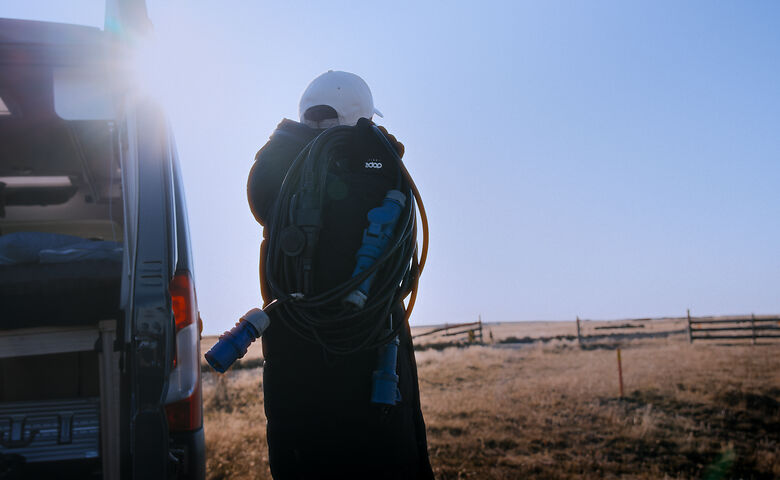
Every motorhome has two electrical systems: 12V and 230V. Understanding the difference makes it much easier to manage your power and avoid flat batteries.
The 12V system runs from your leisure battery, so it works whether you're driving, parked at a campsite or staying off-grid. The 230V system, on the other hand, only works when your motorhome is connected to an electric hook-up.
Tip - Charge laptops and other high-drain devices while you're still connected to an electric hook-up, so you're not caught out later.
What runs on 12V?
The 12V system powers the essentials you'll use every day. Because these appliances use very little electricity, they're designed to run efficiently from the leisure battery.
Typical 12V appliances include:
LED lighting
Water pump
Fridge (depending on the motorhome)
USB charging points
Control panel
This means you can still enjoy the essentials, even when you're staying away from a campsite.
What runs on 230V?
The 230V system works the same way as the sockets at home, but only when you're plugged into an electric hook-up.
This allows you to use appliances such as:
Kettle
Hairdryer
Coffee machine
Laptop charger
Toaster
If you disconnect from the campsite, these sockets stop working. That's completely normal — it just means you're relying on your leisure battery instead.
How to connect to an electric hook-up
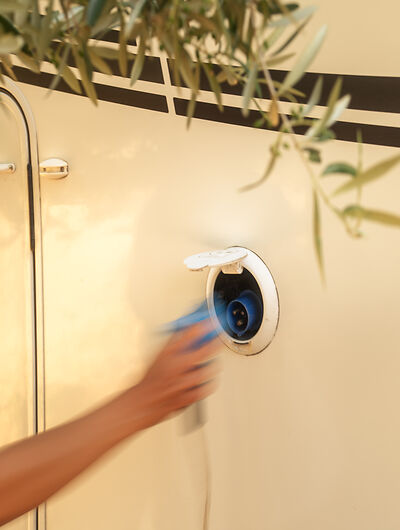
Connecting your motorhome to an electric hook-up is quick and straightforward.
Step 1 - Park within reach
Park close enough for the cable to reach comfortably.
Step 2 - Check the cable
Inspect the cable for any signs of damage before connecting it.
Step 3 - Connect the cable
Plug the cable into your motorhome first, then into the campsite hook-up.
Step 4 - Switch on and test
Turn on the power and check your control panel or one of the 230V sockets to make sure everything is working.
Avoid these common mistakes
Even experienced travellers occasionally make mistakes. Avoiding these will help keep your motorhome electricity running smoothly.
Don't use household extension leads outdoors.
Avoid trapping the hook-up cable under doors or wheels.
Keep cables away from standing water whenever possible.
Don't leave high-powered appliances running unnecessarily.
Check your battery level regularly, especially when travelling off-grid.
How to make your battery last longer
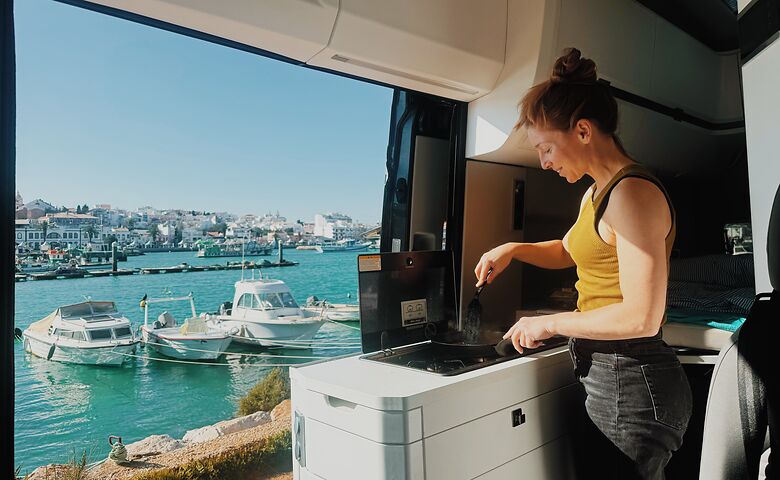
A flat leisure battery can quickly interrupt your trip, especially when travelling off-grid. Fortunately, a few simple habits can help you stay powered for longer.
Whenever possible, charge phones and other devices while driving, as the alternator recharges the battery at the same time. If you're staying at a campsite, use the electric hook-up to fully recharge your battery before moving on.
To make your battery last longer:
Use LED lights whenever possible.
Turn off appliances when you're not using them.
Check your battery level daily.
Use gas for cooking or boiling water where available.
Avoid leaving devices on standby.
These simple habits help you get more from your motorhome's battery and avoid running out of power unexpectedly.
Ready for your first motorhome adventure?
Understanding camper van electricity is easier than many first-time travellers expect. Once you know where your power comes from, how to recharge your leisure battery and when to use 12V or 230V, you'll be able to travel with confidence — and enjoy the trip.
Whether you're planning a weekend break or a longer motorhome holiday, CamperDays makes it easy to compare vehicles from trusted rental companies across the UK and around the world. Compare motorhomes now and find the right one for your trip.
Frequently asked questionsCan I use a kettle in a motorhome?
Can I charge my phone while driving?
How long does a leisure battery last?
Do I need an electric hook-up every night?
Can I use household extension leads?

Do you have any feedback on the article, questions about booking a motorhome, or are you looking for tips? Then feel free to write to us here. We will get back to you as soon as possible.